
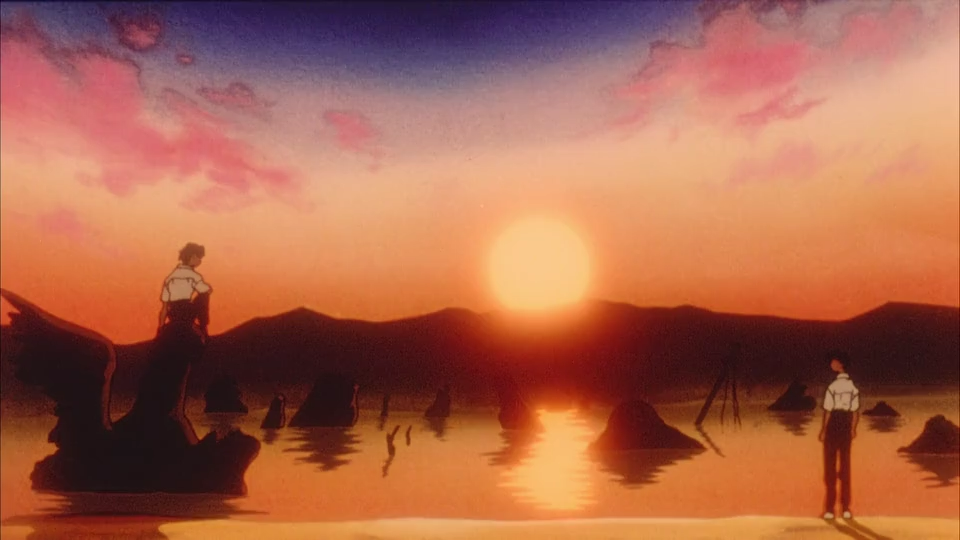
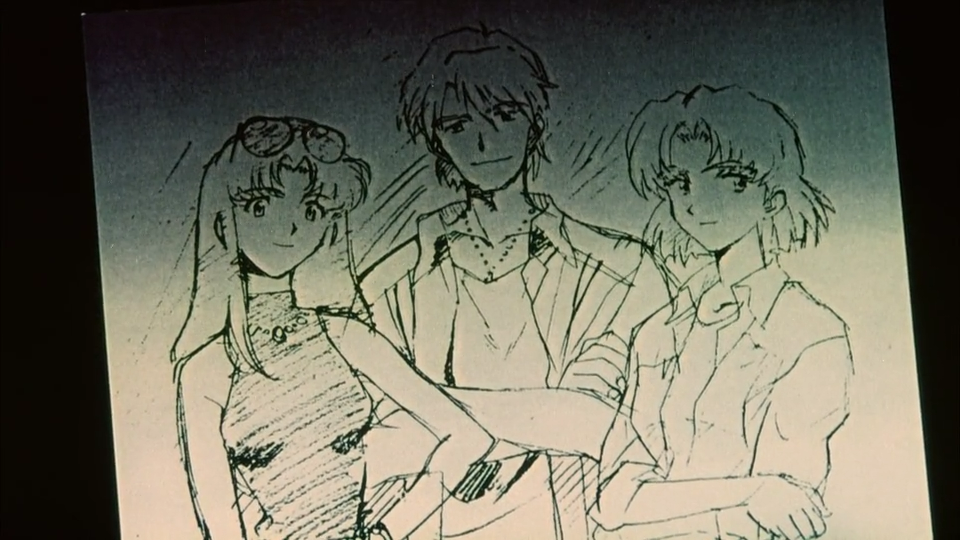
(Note: All screenshots featured in this article come from Evangelion: Death, since it was the only Eva thing I had on my laptop and I felt like getting it out this evening. Evangelion: Death crops the footage from the original series in order to fit a widescreen theatrical presentation, so that cropping has been carried over to the following screenshots.)
Evangelion‘s been on my mind recently. Part of that is undoubtedly due to the various celebrations being done for its 30th anniversary; the two White Albums featuring mostly new arrangements of Shiro Sagisu’s music, the charmingly tongue-in-cheek Evangelion:30+ short film that premiered at the anniversary concerts, and of course the announcement of a new TV series. But I’ve also been wanting to watch the original show the whole way through, something I haven’t done since my first viewing all the way back in 2013.
In general, I haven’t given Eva much thought in quite some time, despite what it meant to me during my teens and early adulthood (as discussed in an old video and two slightly less old articles from this here blog). I don’t find that to be weird, passions come and go as you live your life and things change. My passion for Eva had largely subsided in a pleasant way, it was done for me and I moved on to other passions.
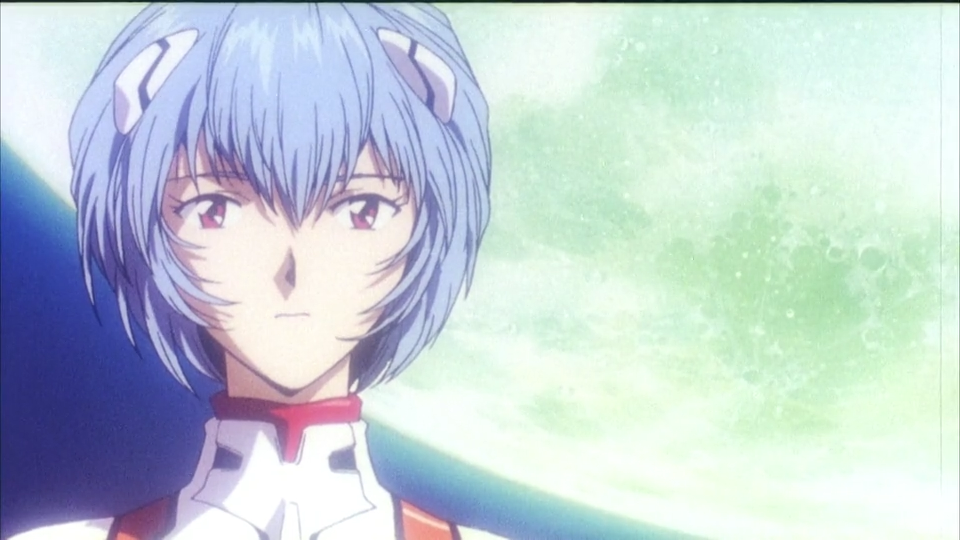
Nevertheless, I finally got round to rewatching the show over the past couple weeks – having just finished episode 16 – and it’s been a very good time. I’m astonished at how well-paced every episode is, how it feels like a lot happens in each despite running only twenty-odd minutes. Admittedly I’ve seen the first ten episodes so often over the years that I probably know them off by heart, so I’m not having to take everything in.
But that’s still true for episodes I haven’t watched in ages, like the subtly hilarious “The Day Tokyo-3 Stood Still”, the compelling technobabble drama “Lilliputian Hitcher”, and the alternately detached and unnerving “Weaving a Story”. Overall, it’s such a strongly directed show, with very intentional cutting and a clarity in its storytelling. Even lesser liked episodes like “A Human Work” I find hugely engaging, featuring cheeky political satire, subtle character development and careful plotting that makes for a fun episode to revisit.
I’m never lost at understanding the basic gist of each episode, but there’s just enough left unsaid to get you thinking about the deeper motivations of the characters and what’s going on in the background. Honestly, it’s a relief compared to something like The Sopranos, another very good show yet one I sometimes found hard to follow with its incredibly dense cast and occasionally unfocused storytelling.
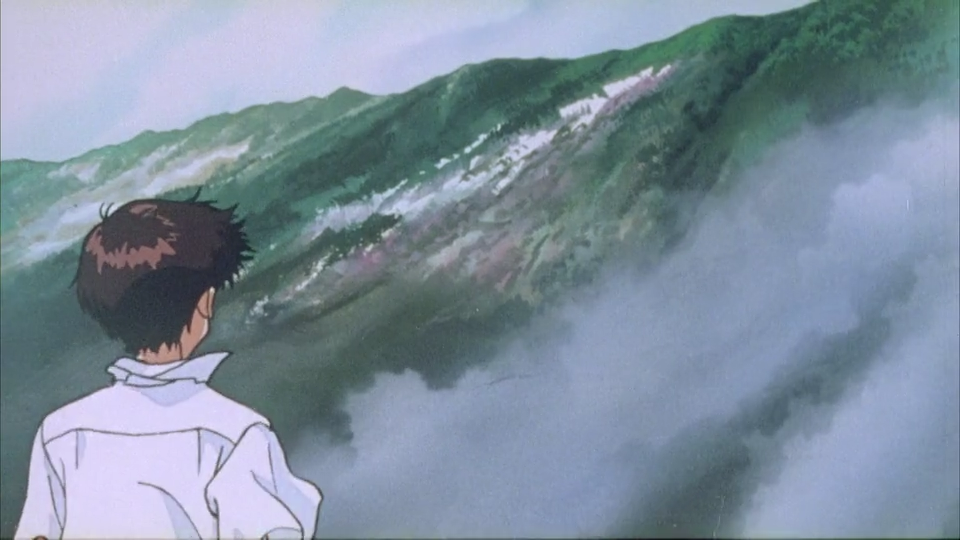
Being so familiar with Evangelion allows rewatches to be just as fun, maybe even moreso because I’m noticing details and remembering how they’ll eventually play out (the various ways that “Lilliputian Hatcher” is reprised in End of Evangelion most strongly comes to mind for me right now). It’s rather interesting to think about revisiting any work, since you’re experiencing it with old and new knowledge at the same time. Some knowledge comes from the work itself, other knowledge comes from whatever you might’ve learnt about the work since, and further knowledge from your own life as your perspective changes.
That idea is something that’s been on my mind, in large part thanks to rewatching the Evangelion: Death compilation movie alongside the main show. I’ve always liked Death, as a unique retelling of the TV series that focuses more on a stream of consciousness logic. The way it flows between scenes, juxtaposing events that were originally several episodes apart, subverting expectations with sudden cuts in sounds or time. It’s almost like viewing someone’s memories of the show, where everything has already happened and they’re simply recalling those memories in whatever order strikes them. (Maybe adding in their own interpretations, whether it’s those flashing intertitles or brand new scenes they’ve dreamt up to flesh out the lore and characters.)
It’s funny how despite not having thought much about Eva in some time, I can so easily get back into the habit the second I start watching something from it again. Sometimes I get to thinking about the characters, what they’re going through, where they’ll end up. Other times I’ll research into the production and learn cool things that reshape my understanding of the show, like how the original broadcast versions of episodes 21 through 24 have never been widely released in Japan (something I was seriously tempted to write about).
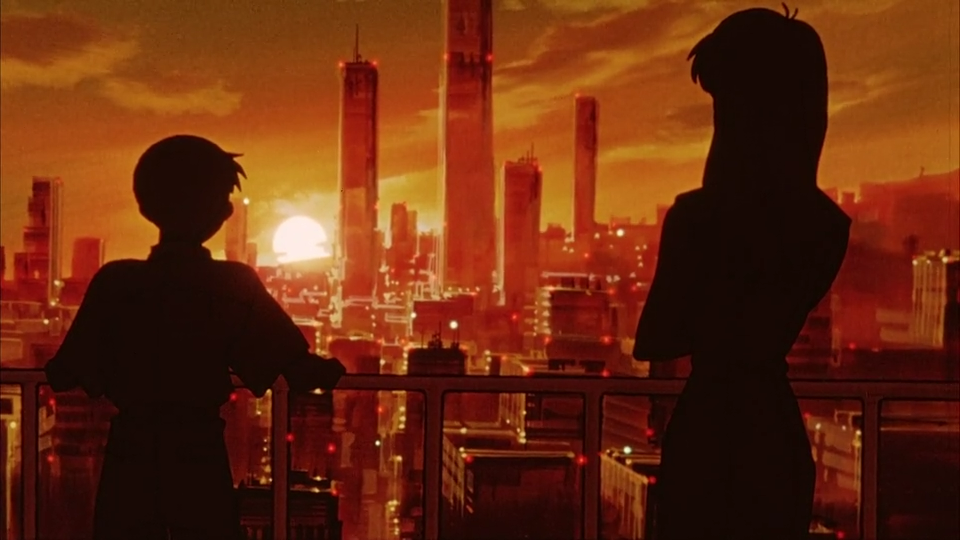
This even applies to Evangelion: Death, since I specifically sought out the original theatrical version, rather than the couple of Death(True) edits that have since superseded it in terms of public availability and interest. There aren’t terribly many differences between the original and final versions, apart from how characters who are meant to be talking over the action become so drowned out in the audio mix they’re practically unintelligible. But I still wanted to experience what movie-goers circa 1997 would’ve gone through.
Although it’s still a while off, maybe I’ll watch the broadcast versions of episodes 21-24 instead of the home video/director’s cut versions. The latter’s how I’ve always seen those episodes, with their various additional scenes and more detailed animation. I’d like to try and experience how the show’s production breaking down starts to reflect in the art, with the gradually less polished looking episodes leading up to the finale where even the medium of anime collapses. That’s one of my favourite things about the TV ending, and I want to feel that more strongly this time around.
I suppose in all these ways, that’s the magic of revisiting something you love: you get to make the old feel new again.
FrDougal9000 writes for hardcoregaming101.net as Apollo Chungus. When he isn’t writing about video games, he is cultivating his love of animation that’s only increased over the last few years as he’s explored the wide, weird and wonderful world of the medium.